
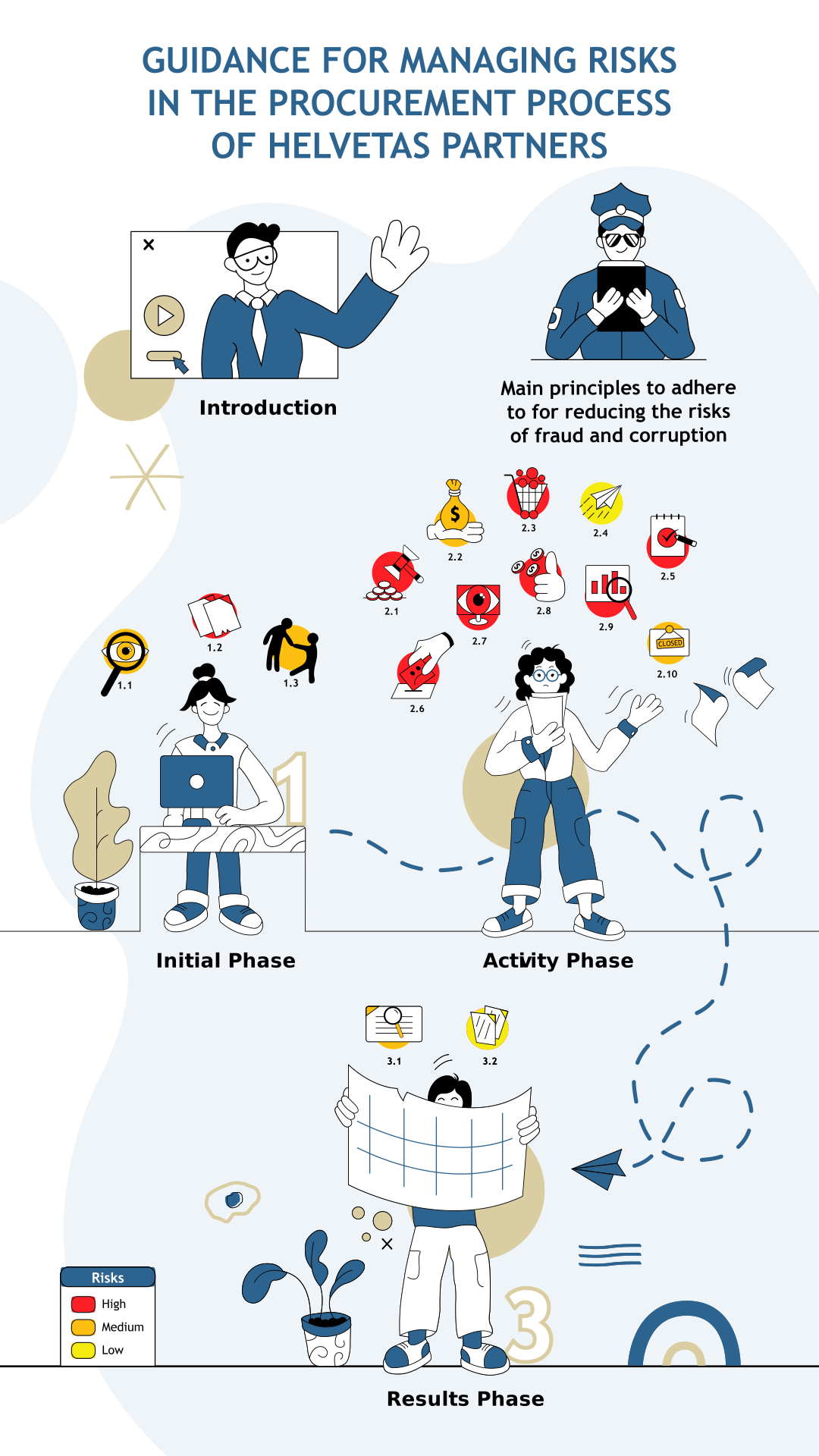

Introduction
Helvetas programmes and projects imply a variety of collaborations at different levels. In programme management, Helvetas distinguishes between different types of collaborations and actors, in particular between.
The purpose of this document is to provide a guidance to Helvetas country offices and projects on how to address the main risks that are likely to happen in a procurement process conducted by Helvetas partners/contracted parties.
When conducting due diligence in the process of selecting a partner/contracted party, this document can also be used as a complementary checklist specifically for partner’s procurement processes and capacities.
Main principles to adhere to in procurement
Accountability
Checks and balances
Competition
Equality and inclusiveness
Four eyes principles
Impartiality and fairness
Independence
Objectivity
Professionalism
Transparency
Value for money
Initial phase (setting up the collaboration)
The initial phase of the process is the most important for this is when the partner is assessed in terms of its maturity for a fair and transparent procurement. The assessment referred to in this document is related to procurement and should complement a regular partner assessment and due diligence conducted by Helvetas.
Identification of the partner
Mapping of potential partners
Assessment of the partner’s procurement capacities
Selection of the partner and definition of the need for support
Collaboration contract
Defining requirements and deliverables
Contracting/Collaboration agreement
Onboarding and sensitisation of the partner
Sharing principles and values
Sensitization on fraud and corruption
Activity phase (monitoring the procurement process of the partner)
This phase is about the procurement conducted by the partner and the role of Helvetas in this process. It carries the highest risks in the entire collaboration, and the staff involved should be highly alerted during the entire process!
Decision for financing
The partner selected or given by the donor does not have the right profile or the necessary capacity for implementing a project according to the acceptable standards.
Conduct needs assessment before deciding to finance the project. Engage external consultants to assess the needs and/or the project proposal of the partner.
Budget allocation
The cost estimations are not appropriate, and budget allocated for the project is either too high or too low.
Include in the project budget all the necessary items based on acceptable standards and market prices.
Procurement preparation
Procurement notice
Selection of appropriate procurement method
Tender specifications
Request for tender dossier
Release of the tender
Distribution of tender dossier
Receipt of offers
Registration of offers
Storage of offers
Tender evaluation
Tender evaluation committee (TEC)
Opening of offers
Validation of offers (assessment of eligibility)
Evaluation process
Selection of the supplier
Awarding a contract
Deadlines for complaints are too short, inhibiting applicants to submit their complaints timely..
Monitor the complaints process through Helvetas staff or external experts. Pay attention to the appointment of members, qualification of members, timelines, handling of complaints, etc.
Monitoring
No monitoring from the side of the partner.
Observe that the partner is monitoring project implementation properly and in line with the agreed rules. Pay attention to definition of roles and responsibilities, report templates, quality of reports, etc.
Acceptance and payment
Acceptance of deliverables which are not according to the required standards.
Monitor that the acceptance is done according to the agreed rules and quality standards. Engage Helvetas staff or external experts to monitor acceptance of deliverables, and/or undertake independent (third party) field visits.
Audit
Terms of reference and contract with the audit are not up to Helvetas expectations.
Monitor implementation of the agreed rules regarding the review and approval of the Terms of reference, but also for following up on audit recommendations.
Closure of partner’s project
Project closure by the partner is not properly documented.
Check that the entire documentation is available and properly filed by the partner. Depending on the roles, Helvetas shall archive its part of documentation.
Results phase (reviewing the results by Helvetas)
The collaboration agreement from the initial phase lays the basis for all activities performed in this phase. The result phase is about reviewing the results of the partner by Helvetas. The users should refer to the earlier phases and steps to cross-reference the information to mitigate the risks.
Fulfilling contract obligations
Payment based on positive review of required documentation
External independent audit
Retender if needed or sanctions
Closure of project